
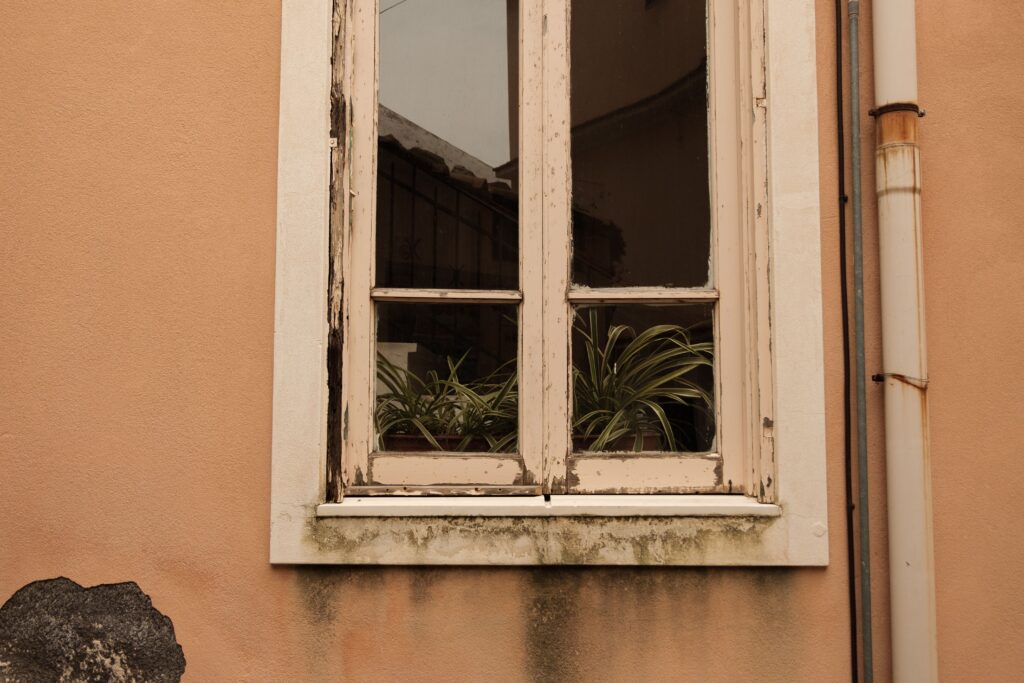
Every homeowner knows the temptation: you notice a little peeling paint, a small stain on the drywall near a window, or a faint musty smell, and you tell yourself you’ll deal with it later. The problem is that in a home, “later” almost always costs more. Many of the most expensive repairs we see started as small, easy-to-fix problems that were left alone long enough to spread.
Here’s how a few common warning signs escalate — and why catching them early saves you real money.
Paint and Caulk Are Your Home’s First Line of Defense
Most homeowners think of paint and caulk as finishing touches — the cosmetic layer that makes things look nice. In reality, they’re one of the most important protective systems your home has. Paint seals and shields wood and other materials from moisture. Caulk and sealant close the gaps around windows, doors, trim, tubs, showers, and countertops where water would otherwise get in.
Here’s the key: these materials only protect your home when they’re fresh and in good shape. Paint that’s cracking, peeling, or worn has stopped doing its job, and caulk that’s dried out, shrunk, or pulled away leaves an open path for water. Once that protective barrier fails, moisture starts reaching the wood and materials underneath — and that’s when small cosmetic issues quietly turn into expensive structural ones. Keeping paint and caulk current is one of the cheapest, most effective ways to protect your home.
Peeling Paint Is Often a Warning, Not Just an Eyesore
It’s easy to see peeling or bubbling paint as a cosmetic issue. Sometimes it is. But peeling paint, water stains, and discoloration are also among the most common signs of a hidden moisture problem — in fact, rotting, buckling, or peeling surfaces show up in nearly a third of water damage cases.
When paint fails on exterior siding or trim, it also removes the protective barrier that keeps moisture out of the wood underneath. Once bare wood is exposed to Ohio’s rain, snow, and humidity, it starts to absorb water — and that’s where the real expense begins. A timely repaint protects the wood and stops the problem before it starts. Waiting often means paying to repair the wood first, then painting anyway.
Wood Rot: Cheap to Catch, Costly to Ignore
Wood rot is the perfect example of a problem that multiplies in cost the longer it sits. Caught early, a small area of rotted trim, a window sill, or localized siding damage is often a straightforward repair in the $200 to $500 range.
But rot doesn’t stay put. It’s caused by a fungus that spreads well beyond where it started, digging deeper into the wood over time. What could have been a small, affordable fix becomes full sill and framing replacement, and structural wood that’s been compromised usually has to be replaced entirely rather than patched. The same small problem can go from a few hundred dollars to a major repair, simply because it was left alone.
Drywall Stains Around Windows Mean Water Is Getting In
This is one of the most important warning signs to never ignore. Discoloration, staining, or soft drywall around a window almost always means water is finding its way in — through failing caulk, worn weatherstripping, a compromised seal, or a problem with the window itself.
Left alone, that moisture doesn’t just stain the wall. It soaks into the window frame and surrounding framing, leading to rot, and creates the damp, dark conditions where mold grows. A rotted window frame caught early might be a $150 to $500 repair. Once the moisture has spread into the sash, sill, and framing, you’re looking at $400 to $900 or more — and if mold and surrounding wall damage are involved, the cost climbs further. That small stain is the cheapest moment to act.
Roof and Window Leaks: The 48-Hour Clock
Leaks are deceptive because the damage often shows up far from the source — water can travel along a rafter for several feet before it ever drips onto your ceiling. By the time you see a brown spot, water has likely been moving through your home for a while.
A roof leak repaired promptly often runs $350 to $1,500. But moisture can begin growing mold within about 48 hours, and over time a leak saturates insulation, rots the wooden rafters, and can eventually threaten the ceiling itself. At that point you’re no longer paying for a leak repair — you’re paying for water damage restoration, which averages well over $3,000 and frequently runs much higher once multiple materials are affected.
The Insurance Catch Most Homeowners Don’t Know
Here’s a detail that makes waiting even more costly: homeowners insurance typically covers sudden damage — a burst pipe, a storm, a fallen tree. It generally does not cover gradual damage from deferred maintenance, like slow leaks, seal failures, or wood rot that developed over time.
In other words, the longer a problem sits and slowly worsens, the more likely you are to be paying for the entire repair yourself. Acting while a problem is still “sudden” and contained often keeps it within the range your insurance will help with — and keeps the repair small in the first place.
The Bottom Line: Small Now Beats Big Later
The pattern is consistent across nearly every home repair: the problem is cheapest, fastest, and least disruptive to fix when it’s small. A fresh coat of paint, a sealed-up window, a patched piece of drywall, or a small wood repair today can prevent thousands of dollars in rot, mold, and structural damage down the road.
If you’ve noticed peeling paint, stains around a window, a musty smell, or any sign that moisture might be getting in, it’s worth having it looked at sooner rather than later.
At Alabaster Contracting Solutions, we help homeowners across Greater Cincinnati, Dayton, and Southwest Ohio catch these problems early and repair them right — from drywall and water damage repair to wood rot, painting, and the kind of finish work that protects your home. If something’s been on your “deal with it later” list, reach out for a free estimate. Handling it now is almost always the smarter, less expensive choice.